TripUp
TripUp
Deciding together, without the chaos
Deciding together, without the chaos
Deciding together, without the chaos
A group travel app that turns the messiest part of any trip (the decisions) into something fast, fun, and friction-free.
A group travel app that turns the messiest part of any trip (the decisions) into something fast, fun, and friction-free.
Role
Product Designer
Product Designer
duration
May 2026
May 2026
team
1 Designer (me!)
Skills
UX Design,
Visual Design,
Prototyping

Context
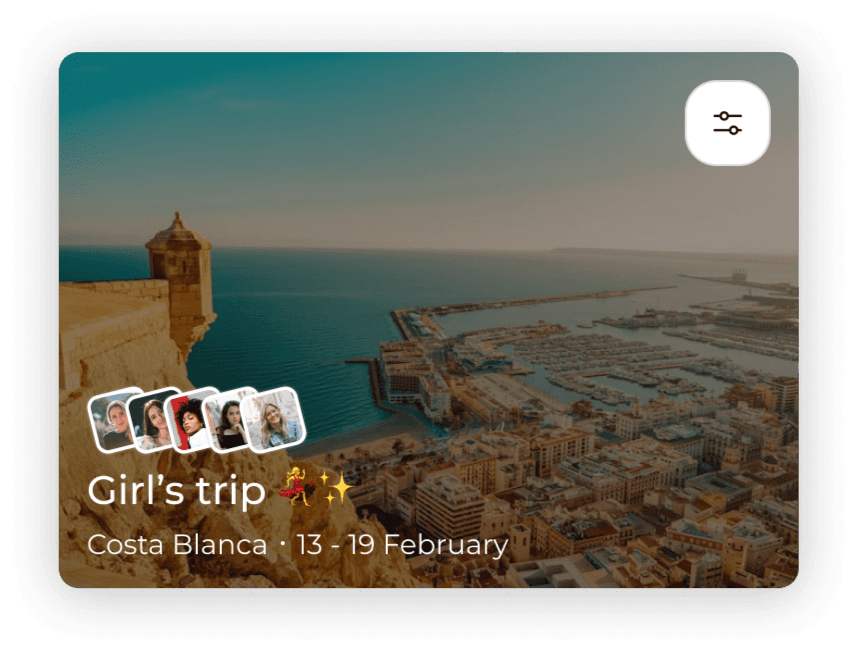
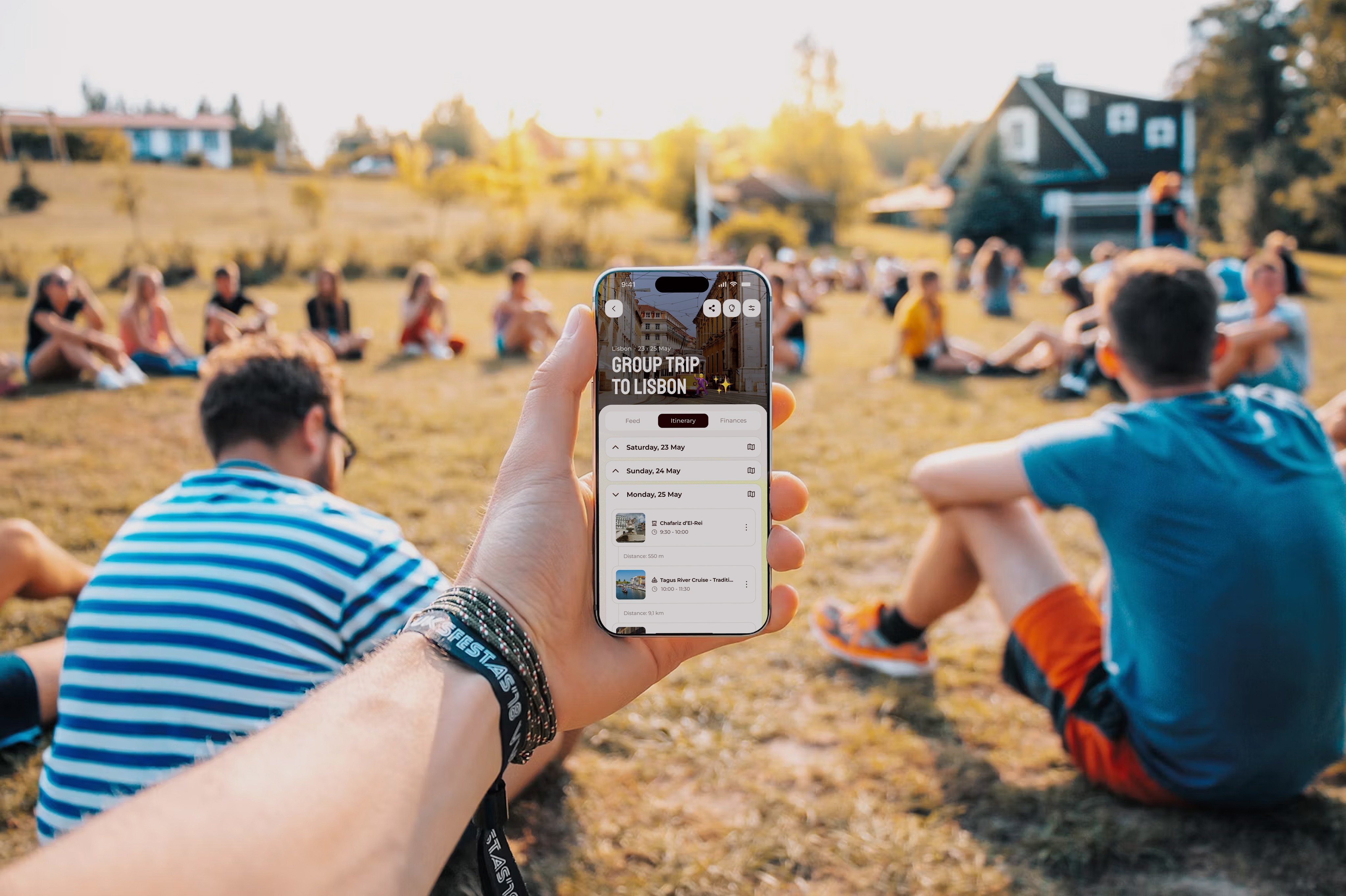
TripUp is a group travel app where friends plan trips, make decisions, and settle expenses without switching tools. I designed the full experience: user flows, wireframes, and a complete high-fidelity prototype, following one user scenario from start to finish.
TripUp is a group travel app where friends plan trips, make decisions, and settle expenses without switching tools. I designed the full experience: user flows, wireframes, and a complete high-fidelity prototype, following one user scenario from start to finish.
The problem
Group trips are fun. Group decisions aren't.
Group trips are fun. Group decisions aren't.
Decisions happen on the fly. Where to eat, what to do, who pays. Nobody wants to lead every choice, but everyone wants a say. And when the back-and-forth drags on, someone just picks something and the group chat moves on.
Decisions happen on the fly. Where to eat, what to do, who pays. Nobody wants to lead every choice, but everyone wants a say. And when the back-and-forth drags on, someone just picks something and the group chat moves on.
Three tensions define the experience:
Three tensions define the experience:
Spontaneous but shared
Most group decisions happen mid-motion, with no time for deliberation. But everyone still wants their input to count, not just the person who spoke first.
Most group decisions happen mid-motion, with no time for deliberation. But everyone still wants their input to count, not just the person who spoke first.
Structured but fast
Open chats are exhausting. People want a faster way to decide. But the moment that faster way feels like effort, they abandon it entirely.
Open chats are exhausting. People want a faster way to decide. But the moment that faster way feels like effort, they abandon it entirely.
Decided but invisible
A choice gets made in the chat, and then what? Someone has to manually update the plan, remind the others, track who saw it. The decision exists, but the group isn't actually aligned.
A choice gets made in the chat, and then what? Someone has to manually update the plan, remind the others, track who saw it. The decision exists, but the group isn't actually aligned.
These are the default state of any group trip and no existing app treats them as the core problem worth solving yet.
These are the default state of any group trip and no existing app treats them as the core problem worth solving yet.

COMPETITOR ANALYSIS
What already exists and where it falls short
Before designing anything, I mapped the competitive landscape. Several apps already tackle parts of the group travel problem, but none cover the full arc of a shared trip moment.
Before designing anything, I mapped the competitive landscape. Several apps already tackle parts of the group travel problem, but none cover the full arc of a shared trip moment.
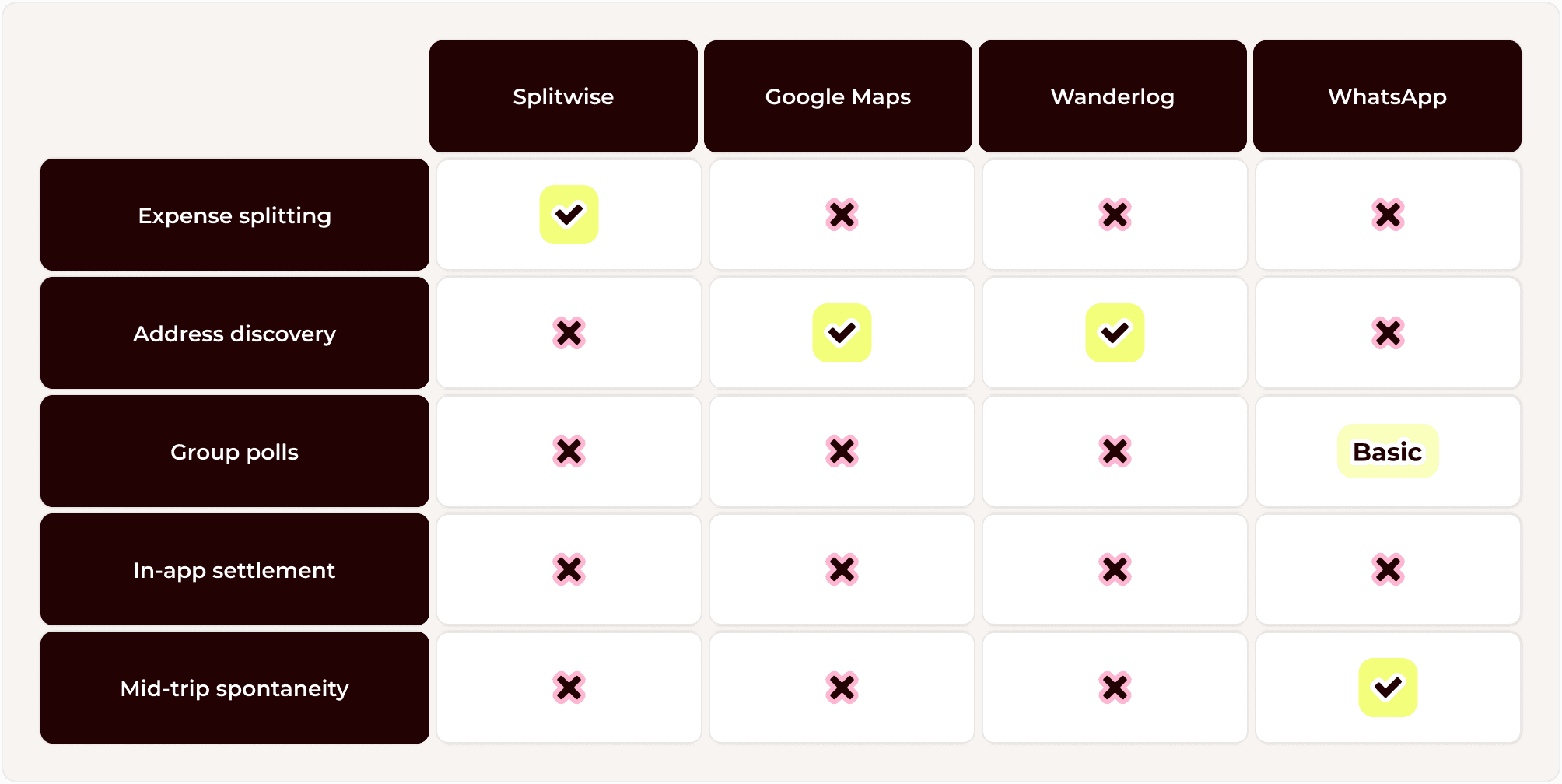
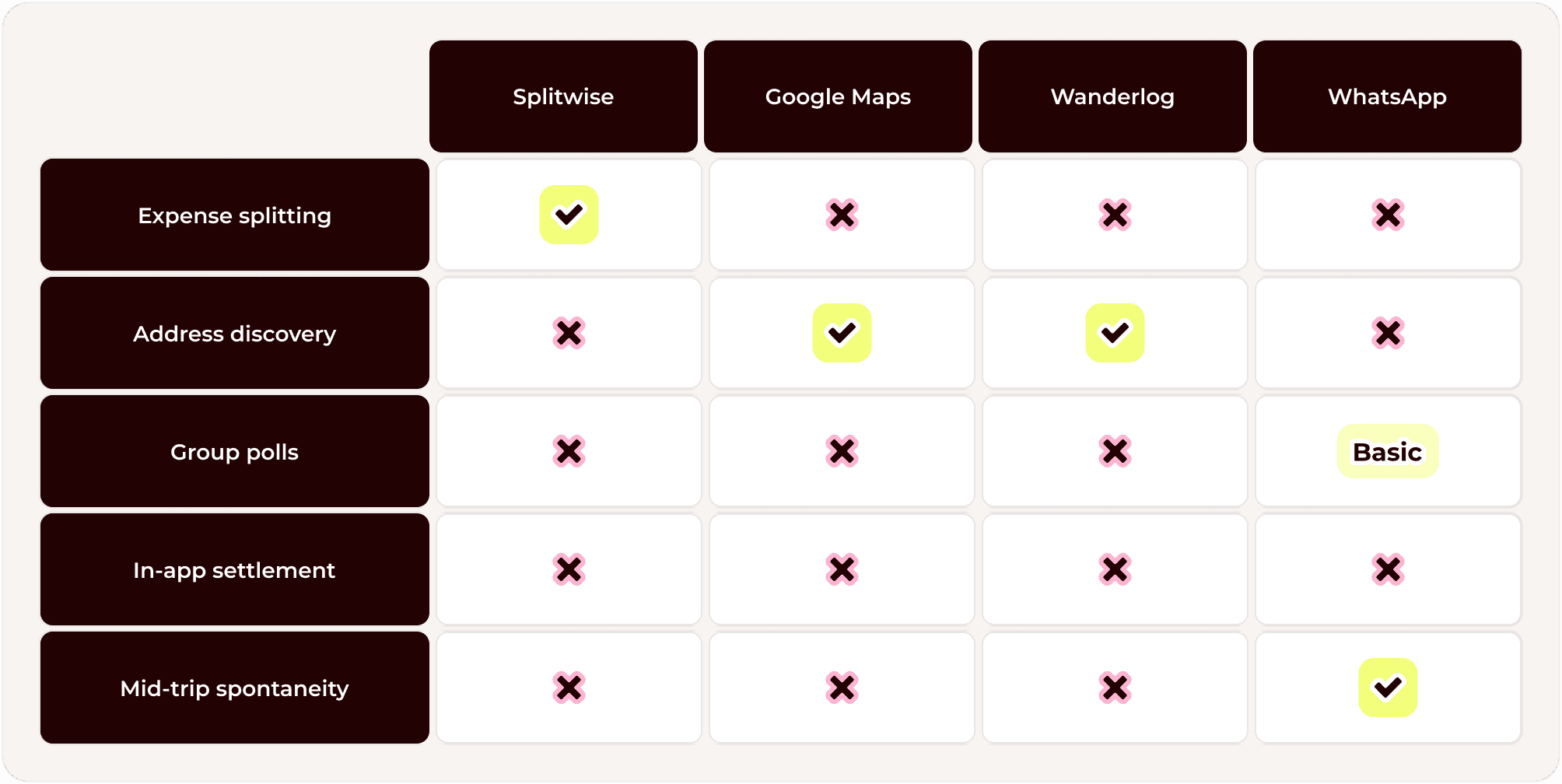
Splitwise solves the money problem well, but in complete isolation. You have to already know what happened, who was there, and what they owe before you even open it. No context, no connection to the rest of the trip.
Splitwise solves the money problem well, but in complete isolation. You have to already know what happened, who was there, and what they owe before you even open it. No context, no connection to the rest of the trip.
Google Maps is where everyone finds restaurants, landmarks, and places worth visiting. But discovery stops there, you can't share a shortlist with the group, vote on options, or add anything to a shared plan.
Google Maps is where everyone finds restaurants, landmarks, and places worth visiting. But discovery stops there, you can't share a shortlist with the group, vote on options, or add anything to a shared plan.
Wanderlog is genuinely good for planning before the trip. Visual itineraries, collaborative editing, map-based organization. But mid-trip, when decisions are fast and unplanned, it breaks down completely.
Wanderlog is genuinely good for planning before the trip. Visual itineraries, collaborative editing, map-based organization. But mid-trip, when decisions are fast and unplanned, it breaks down completely.
WhatsApp wins by default, it's where every group already lives. But it was built for messaging, not decision-making. Choices get buried in chat, nothing is ever confirmed, and the plan exists only in whoever's memory.
WhatsApp wins by default, it's where every group already lives. But it was built for messaging, not decision-making. Choices get buried in chat, nothing is ever confirmed, and the plan exists only in whoever's memory.
No existing tool covers the full arc: find a place, get the group to agree, add it to the plan, split the bill, settle up.
No existing tool covers the full arc: find a place, get the group to agree, add it to the plan, split the bill, settle up.
User profiles
Getting to know our users
Getting to know our users

The Organizer
Typically the most proactive member. They set up the trip, invite others, and keep things moving.
Typically the most proactive member. They set up the trip, invite others, and keep things moving.

The Participants
They want to be involved without being overwhelmed. They suggest ideas, vote on decisions, and want to stay informed.
They want to be involved without being overwhelmed. They suggest ideas, vote on decisions, and want to stay informed.
KEY DECISIONS


Discovery before polls
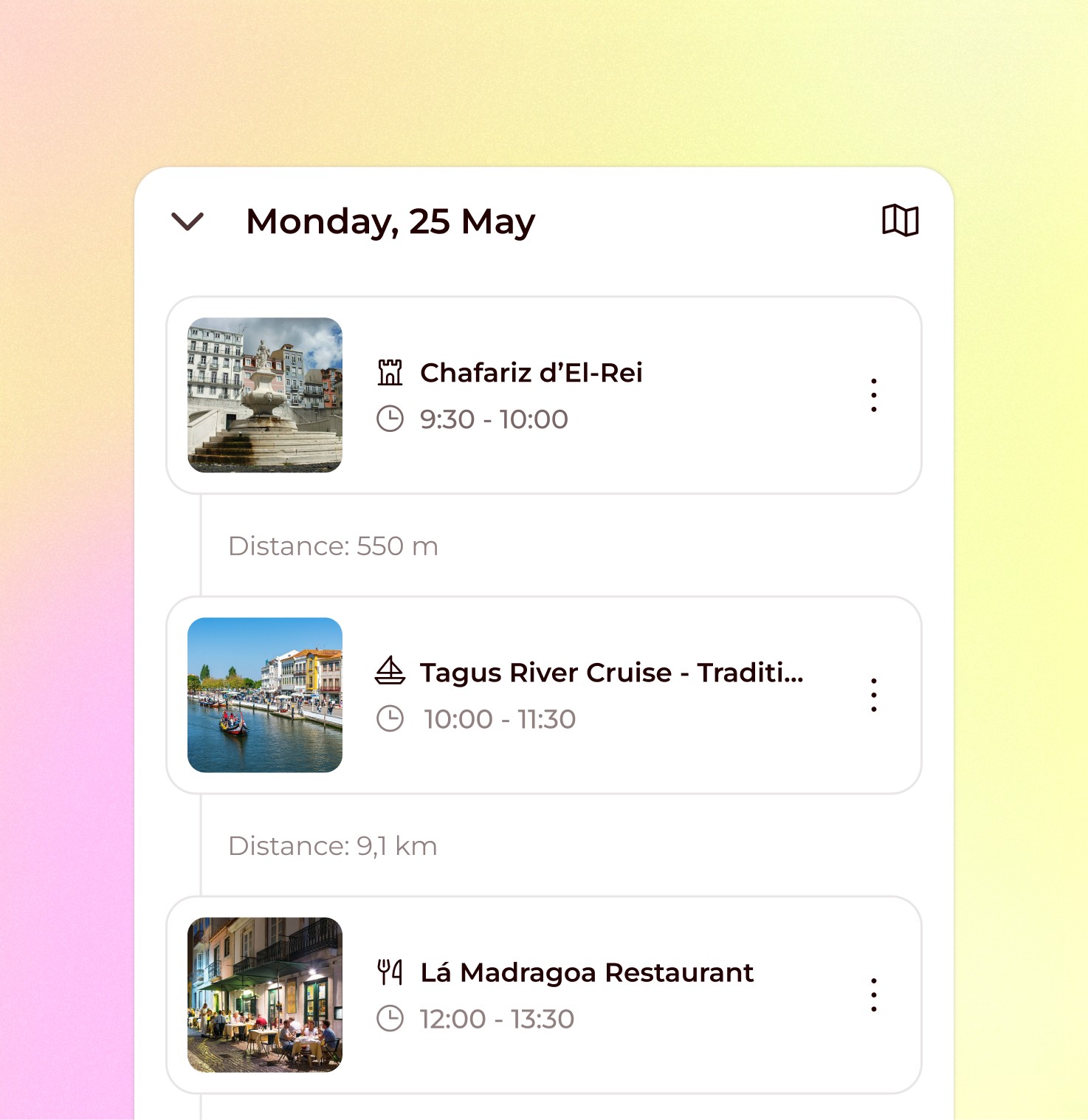
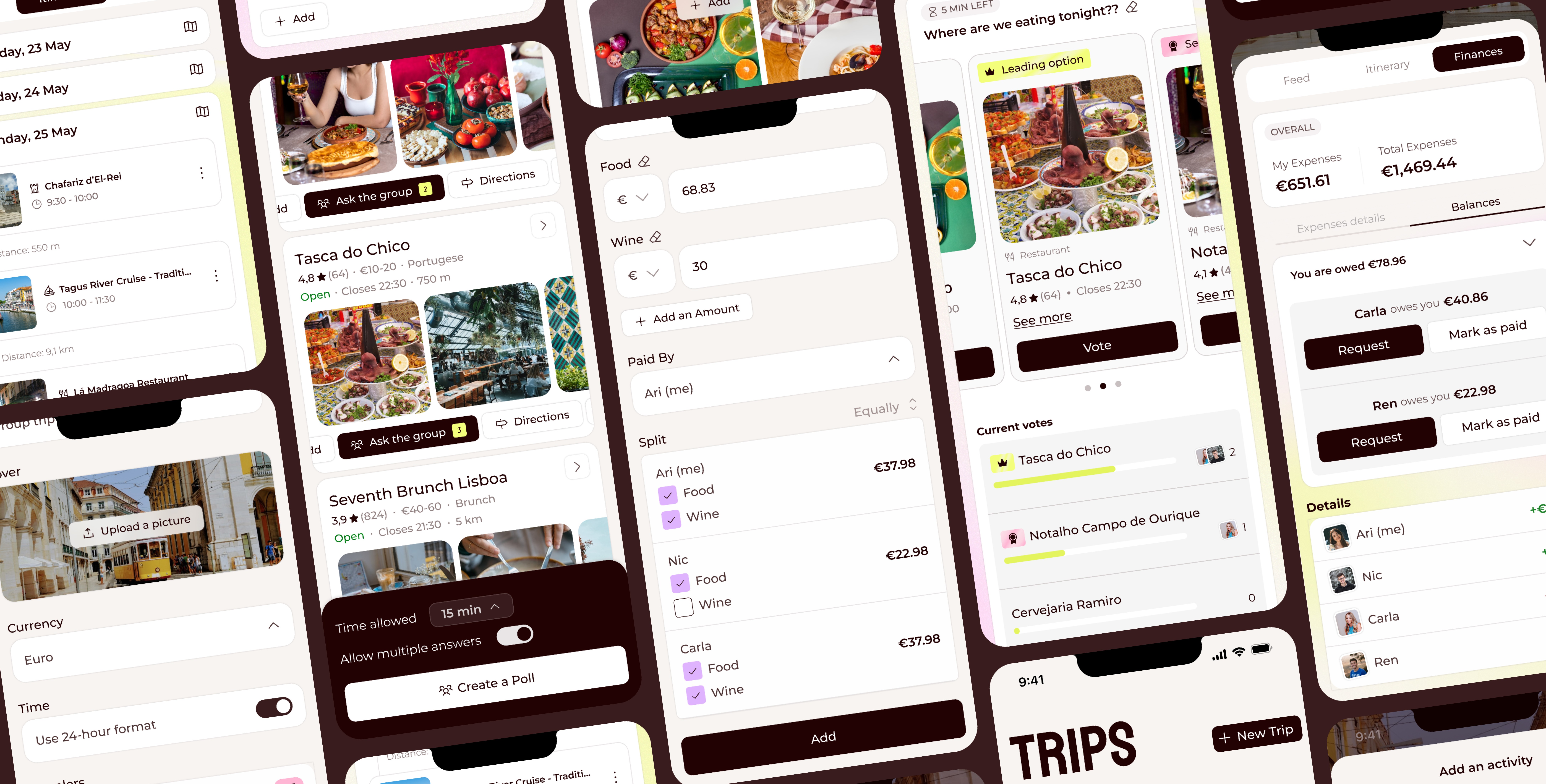
Typing restaurant names into a poll form is too much effort mid-trip. In TripUp, any participant can browse nearby restaurants, selects a few they like, and with one tap, sends a pre-populated poll to the group. No form. No friction.
Typing restaurant names into a poll form is too much effort mid-trip. In TripUp, any participant can browse nearby restaurants, selects a few they like, and with one tap, sends a pre-populated poll to the group. No form. No friction.
Context inside the poll
Restaurant names mean nothing without photos, ratings, and distance. All of it is embedded directly in the poll card, the group decides without leaving the app.
Restaurant names mean nothing without photos, ratings, and distance. All of it is embedded directly in the poll card, the group decides without leaving the app.



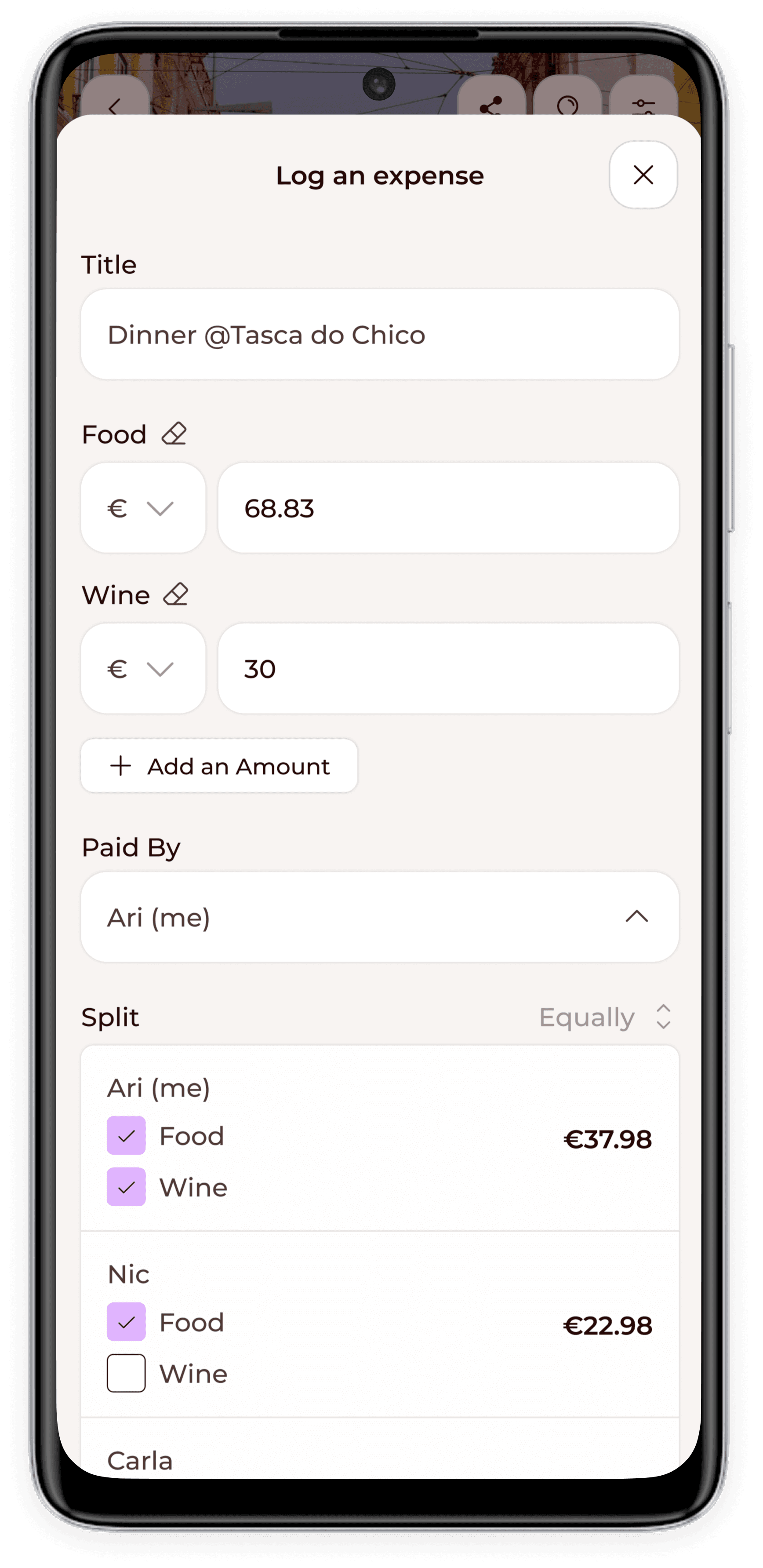
Splits that match real behavior
You can exclude some participants from the wine specifically. Not by adjusting percentages but by unticking their names under that line item. No need to think too much, it's just that easy.
You can exclude some participants from the wine specifically. Not by adjusting percentages but by unticking their names under that line item. No need to think too much, it's just that easy.
LEARNINGS
This project pushed me to think at the system level, not just screen by screen, but how decisions made in one part of the flow create expectations in the next.
This project pushed me to think at the system level, not just screen by screen, but how decisions made in one part of the flow create expectations in the next.
The hardest part wasn't designing any individual screen. It was making sure the experience never felt like the user had switched contexts, that going from browsing restaurants to creating a poll to watching votes come in felt like one continuous gesture, not three separate tasks stitched together.
The hardest part wasn't designing any individual screen. It was making sure the experience never felt like the user had switched contexts, that going from browsing restaurants to creating a poll to watching votes come in felt like one continuous gesture, not three separate tasks stitched together.
It also reinforced something I find genuinely compelling about this problem space. Group coordination is hard in a way that's easy to underestimate. The apps that get it right don't just solve a functional problem, they reduce the small social frictions that make shared experiences more stressful than they should be. That's worth designing well.
It also reinforced something I find genuinely compelling about this problem space. Group coordination is hard in a way that's easy to underestimate. The apps that get it right don't just solve a functional problem, they reduce the small social frictions that make shared experiences more stressful than they should be. That's worth designing well.
Take a look at another one of my projects.
Take a look at another
one of my projects.